Shop Branding Checklist in Kenya: What You Need Before Opening a New Shop
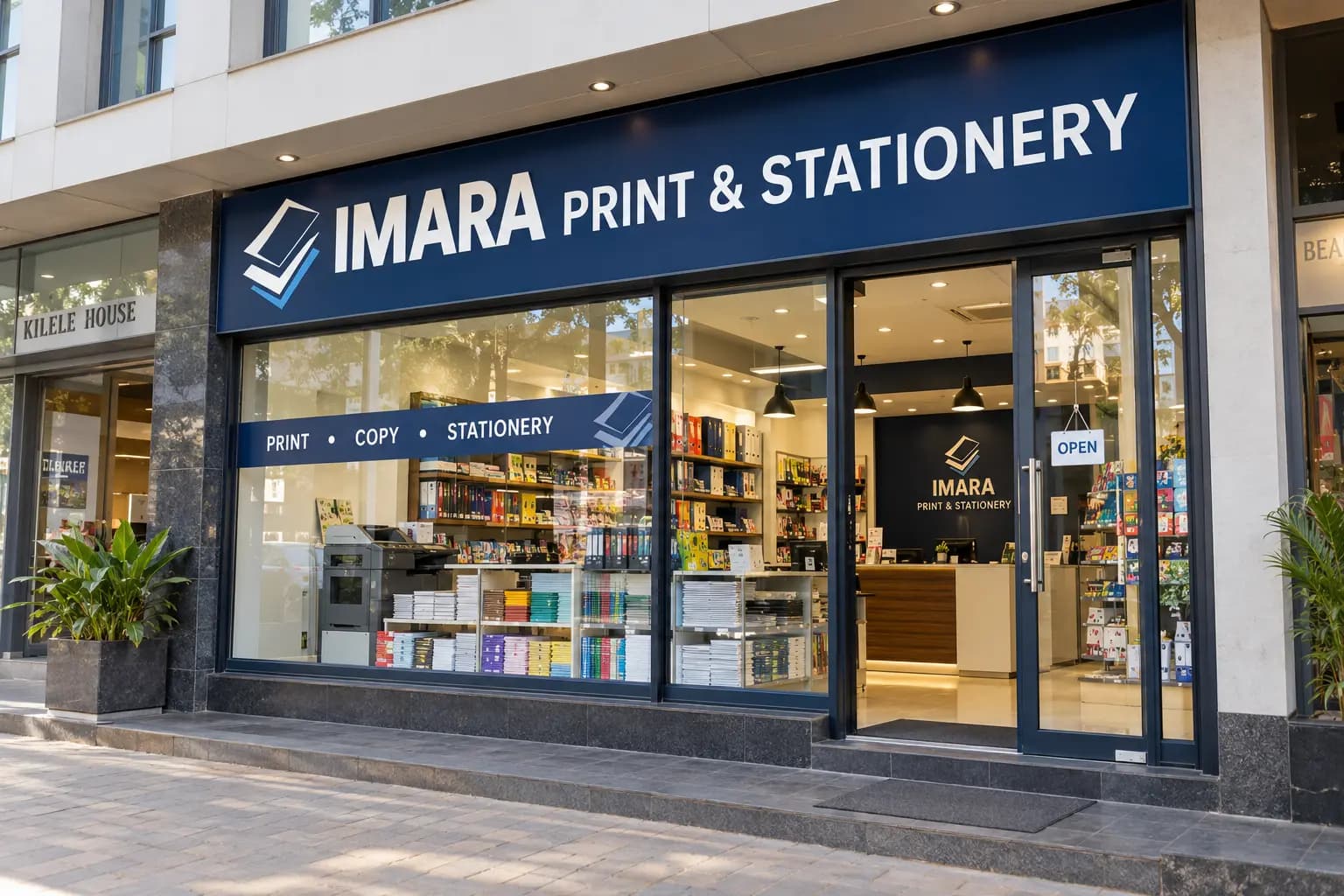
Before opening a new shop, you need customers to recognise your business, find the entrance and understand what you sell. Your shopfront sign, window graphics and interior branding all contribute to that first impression.
Planning these elements together helps you use your space effectively and prepare a clearer brief for your designer and signage supplier. It also helps you identify costs before production begins.
This shop branding checklist in Kenya explains what to prepare, which surfaces to consider and what to confirm before installation.
1. Prepare Your Business Name, Logo and Colours
Start with the identity that will appear throughout your shop. Confirm the exact spelling of your business name, your approved logo and the colours you want to use.
Using different versions of your logo across the sign, entrance and interior can make the shop look inconsistent. Keep one approved set of artwork files for the project.
Prepare:
- Your logo in a suitable high-quality format, preferably a vector file where available.
- Your approved business name and tagline, if you use one.
- Your brand colours.
- The telephone number and other contact details you want displayed.
- A short, accurate description of your main products or services.
If you only have a small logo image downloaded from social media, ask whether it needs to be recreated before printing or fabrication. Enlarging a low-resolution image can produce unclear edges.
2. Take Photographs and Measurements of the Shop
Your branding should fit the actual premises. Before requesting a quotation, photograph the shopfront, entrance, windows and any interior walls you want to brand.
Take a wide photograph showing the surrounding area as well as closer photographs of each surface. This helps your supplier understand the available space, existing fixtures and possible installation challenges.
Record approximate measurements for:
- The main sign area.
- Window panes and glass doors.
- Interior feature walls.
- Counters or reception panels.
- Existing signs that need replacement.
Mark your measurements clearly and confirm the units. Final measurements may need to be checked on site before production.
For a coordinated project, explore our shop branding services in Kenya and share photographs of your premises when requesting a quote.
3. Choose a Clear Main Shopfront Sign
Your main sign should make the business easy to identify. Start with the business name, then decide whether a short description is needed to explain what you sell.
Consider where customers will see the sign from. Someone walking past your entrance has a different viewing distance from someone approaching across a road.
Check:
- Whether the business name is readable from the expected distance.
- Whether the lettering contrasts clearly with the background.
- Whether trees, awnings or nearby signs obstruct the view.
- Whether the design fits the available frontage.
- Whether the sign needs to remain visible after dark.
Avoid filling the main sign with every product, service and contact detail. Supporting information can appear on windows, doors or an information panel.
Should You Choose 2D or 3D Signage?
A flat sign can work well when you need printed graphics or additional service information. Raised letters create depth and can make the business name a prominent feature.
Explore 2D signage for flat sign options, or 3D signage in Kenya for raised lettering and logos.
Ask for recommendations based on your location, budget, wall surface and lighting requirements.
4. Plan Window Graphics Around Visibility
Windows can communicate useful information while giving customers a view of your shop.
Decide what each window should do before covering it. One pane might display your main services, while another remains clear to show products inside.
Depending on your business, window graphics could include:
- Your logo.
- A concise list of main services.
- Selected product images.
- Opening hours.
- A telephone number or website.
Keep the wording readable and leave enough space between elements. Too many messages can make it difficult for someone passing by to understand the main offer.
If you need privacy, discuss suitable coverage and materials with your supplier. Review the design from both inside and outside before approving it.
5. Make the Entrance Easy to Understand
Customers should be able to identify the entrance and know what to do when they reach it.
Check whether your door needs opening hours, push or pull instructions, a business name or a contact number for enquiries when the shop is closed.
Place information where it can be read comfortably. Avoid positioning important details behind handles, frames or other fixtures.
If the premises have several entrances, consider whether a directional sign would help visitors find the correct door.
Before production, check every telephone number and opening time. Small errors can lead to unnecessary reprinting.
6. Choose Interior Branding That Serves a Purpose
Interior branding should help customers understand the space and reinforce the identity introduced outside.
A logo wall behind a counter may create a clear focal point. Product information near a display can help customers compare options. Directional signs can guide visitors to collection points, service desks or different sections.
Choose what your shop needs rather than branding every available surface.
| Area | Possible branding | Main purpose |
|---|---|---|
| Entrance | Business name and opening hours | Confirm that customers have reached the right place |
| Counter | Logo or service information | Identify the main assistance point |
| Product displays | Category names and product details | Help customers browse |
| Interior feature wall | Logo and selected brand messaging | Create a consistent visual identity |
| Collection area | Clear collection instructions | Guide customers through the process |
Keep essential information easy to update if your services, prices or opening hours change.
7. Select Materials for the Installation Environment
The right material depends on where it will be used and the finish you want.
Outdoor signs need specifications suited to their exposure and mounting conditions. Interior graphics need to suit the wall, glass or counter surface where they will be applied.
Ask your supplier to explain:
- The proposed material and thickness, where relevant.
- The printing or fabrication method.
- The surface preparation required.
- How the branding will be fixed or applied.
- Cleaning and maintenance requirements.
- Any warranty terms.
Photographs can help you compare appearances, but they do not show every construction detail. Request a material sample or a relevant completed-project example when needed.
8. Plan Your Shop Branding Budget
Shop branding costs depend on the surfaces included, dimensions, materials, design complexity and installation requirements.
A quotation for one sign will differ from a project covering the sign, windows, entrance and interior. Lighting, removal of old graphics and access equipment can also affect the total.
Ask for an itemised quotation covering the agreed scope.
| Cost item | What to confirm |
|---|---|
| Design and artwork | What preparation and revisions are included |
| Production | Materials, sizes, quantities and finishes |
| Installation | Labour, mounting and access requirements |
| Existing branding removal | Whether dismantling and surface preparation are included |
| Lighting | Components and electrical work included in the scope |
| Taxes and transport | Applicable VAT and delivery or travel charges |
If your budget is limited, prioritise the main sign, entrance information and the most useful supporting graphics. Additional interior elements can be planned as a later phase.
9. Confirm Permissions and Installation Arrangements
Before production, confirm with your landlord or building manager which surfaces you may use and whether there are restrictions on size, placement, lighting or fixing methods.
Check any applicable local signage requirements for your location.
Also agree on practical installation details:
- Access to the premises.
- Working hours.
- Availability of electrical power where needed.
- Who will move stock or furniture.
- Whether the shop needs to close during part of the work.
- Who will approve the completed installation.
Resolve these details early so the production and installation plan matches the site conditions.
10. Review the Artwork Before Approving Production
An artwork proof is your opportunity to check the design before it becomes a finished sign or printed graphic.
Review the wording, dimensions, colours, logo proportions and contact details. Ask for a mock-up showing the proposed design on a photograph of your shop.
Remember that an on-screen mock-up illustrates the intended layout. Confirm the material and finish separately, especially where colour matching is important.
Check:
- Business name spelling.
- Telephone numbers and website address.
- Opening hours.
- Product and service wording.
- Logo quality and proportions.
- Final dimensions and quantities.
- Placement around doors, frames and fixtures.
Provide one consolidated set of corrections, then approve the final version clearly.
Your Shop Branding Checklist Before Opening
Before scheduling production, make sure you have:
- Approved your logo, wording and colours.
- Shared clear site photographs and measurements.
- Chosen the main sign format.
- Planned window and entrance information.
- Selected useful interior branding.
- Confirmed materials and installation methods.
- Reviewed the itemised quotation.
- Confirmed permissions and site access.
- Approved the final artwork.
- Agreed on production and installation dates.
Work backwards from your opening date and leave time to inspect the finished installation.
Frequently Asked Questions About Shop Branding in Kenya
What should I brand first when opening a shop?
Start with the elements that help customers identify and enter your business: the main sign, entrance information and essential window graphics. Add interior branding according to your layout and budget.
How much does shop branding cost in Kenya?
The cost depends on the project scope, dimensions, materials and installation conditions. Share photographs, approximate measurements and your requirements to request an accurate quotation.
Can I brand my shop in stages?
Yes. You can plan the complete design first, then produce selected elements in phases. Keeping approved artwork and specifications helps maintain consistency as you add more branding.
Can existing shop branding be replaced?
It may be possible to remove or update existing graphics, but the surfaces and sign structure should be assessed first. Include photographs of the existing branding in your enquiry.
What should I send when requesting a quote?
Send your logo, shop location, photographs, approximate measurements, preferred branding elements and required completion date. A budget range can also help your supplier recommend suitable options.
Plan Your Shop Branding with Tena Graphics
Prepare your shop for opening with branding designed around your premises, customers and budget.
Explore our shop branding services in Kenya, including options to discuss for your storefront and selected interior surfaces. You can also compare 2D signage and 3D signage for your main business sign.
Call or WhatsApp 0704 483 613 to request a quotation. Share your logo, shop photographs, approximate measurements and location so we can discuss the design, production and installation requirements.
Comments
No comments yet. Be the first to share your thoughts.
Need printing or branding for your business?
Tena Graphics EA Ltd offers high-quality printing, corporate branding, merchandise, business cards, banners, and apparel across Kenya with fast delivery.