3D vs 2D Signage in Kenya: Costs, Materials and How to Choose
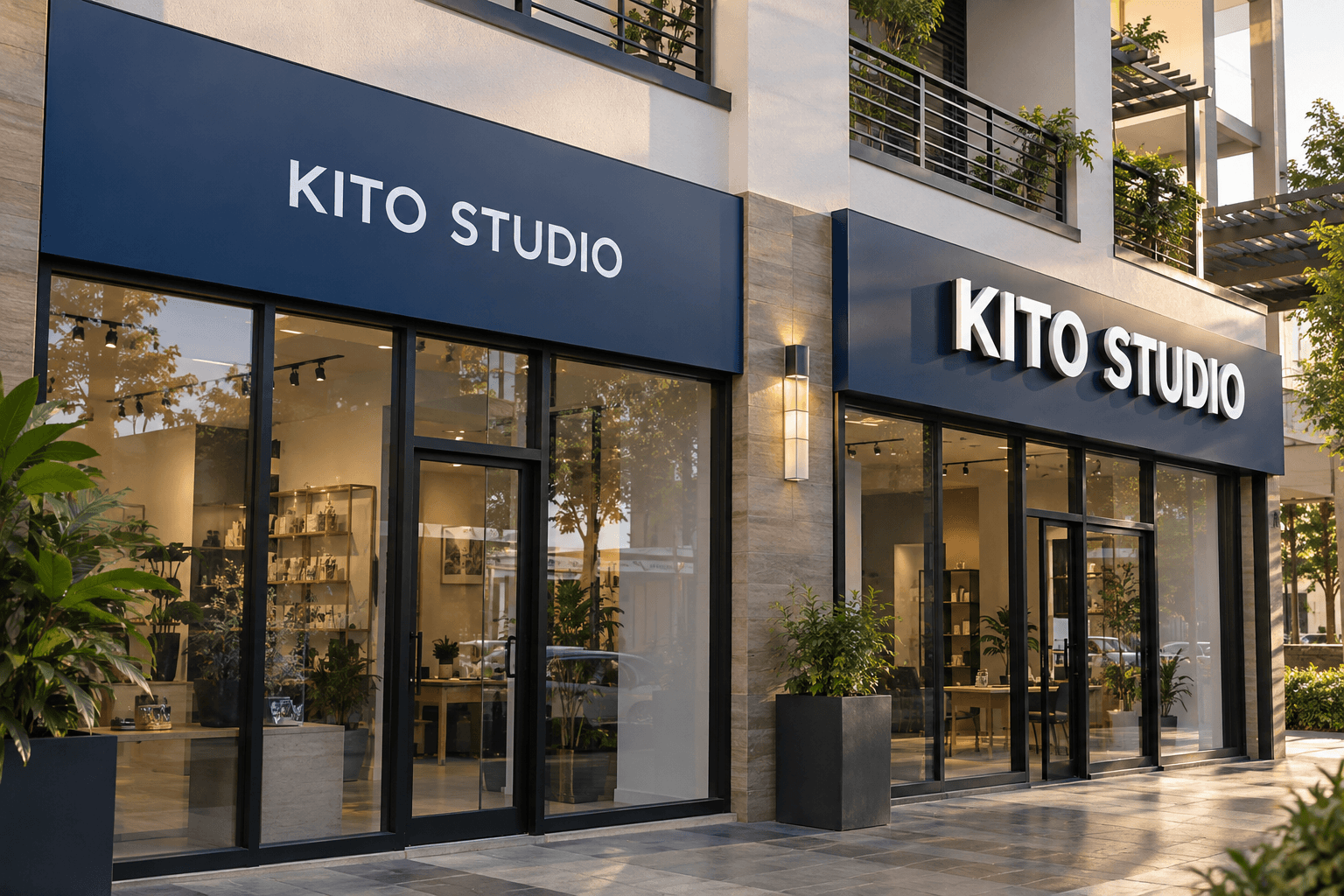
Two options to consider are 2D and 3D signage. A 2D sign presents your design on a flat surface, while a 3D sign uses raised elements to create depth.
The best choice depends on where the sign will be installed, how far away customers need to read it and whether it should remain visible after dark.
This guide compares 3D and 2D signage in Kenya to help you prepare for your next signage project.
What Is 2D Signage?
2D signage displays text, logos and graphics on a flat surface. The design may be printed, painted or applied using cut vinyl, depending on the material and finish.
Examples include flat shop signs, information boards, directional signs and printed panels.
A flat sign can display a simple logo or a more detailed message containing services, contact details and business hours. Its effectiveness depends on clear design, readable lettering and suitable placement.
Explore our 2D signage options when planning a flat business sign.
What Is 3D Signage?
3D signage uses raised letters, logos or shapes that project from a wall or backing panel. This creates depth and visible edges, giving the design a more dimensional appearance.
The raised elements can be mounted individually or attached to a supporting panel. Depending on the construction, lighting may be incorporated to illuminate the letter faces or create a glow behind them.
Examples include raised reception logos, individual shopfront letters and illuminated business names.
Browse our 3D signage in Kenya to discuss a suitable design for your premises.
2D vs 3D Signage: What Is the Difference?
| Feature | 2D signage | 3D signage |
|---|---|---|
| Appearance | Flat text and graphics | Raised letters, logos or shapes |
| Design flexibility | Suitable for detailed printed graphics and information | Often suited to prominent business names and logos |
| Materials | Can use printed or vinyl-covered panels | Can use fabricated or cut acrylic, metal and other suitable materials |
| Lighting | Can be externally lit or form part of a lightbox | Can incorporate face lighting, backlighting or external lighting |
| Cost | Often more economical for straightforward projects | Often costs more because of fabrication and mounting |
| Installation | Depends on panel size, surface and access | May require precise spacing, templates, wiring and additional fixing work |
| Maintenance | Depends on the print, material and exposure | Depends on the material, construction and any lighting components |
These are general comparisons. A large, elevated 2D sign can cost more than a small, unlit 3D reception logo. Compare quotations using the actual specifications of your project.
Materials Used for Business Signage
Material selection affects the sign’s appearance, weight, durability and maintenance requirements.
Aluminium Composite Panels
Aluminium composite panels can provide a flat backing surface for printed graphics, vinyl lettering or raised elements.
They are useful when a design needs a defined panel behind the business name or logo. The panel specification, support structure and fixing method should suit the installation location.
Acrylic
Acrylic can be used for cut letters, logos, panels and components of illuminated signs.
It is available in different colours and finishes. Thickness, fabrication and mounting influence the final appearance, so ask to see a relevant sample or completed project.
Metal
Metal can be used for fabricated letters, logos and backing structures. Stainless steel and aluminium offer different finish and fabrication options.
Confirm the proposed metal, finish and suitability for the environment. Outdoor installations need appropriate consideration of weather exposure, fixings and corrosion resistance.
Printed Vinyl
Printed vinyl allows photographs, brand colours and detailed graphics to be applied to a suitable surface.
For outdoor work, ask about the vinyl specification, protective finish and suitability for the intended exposure. The condition and preparation of the surface also matter.
The right material depends on the complete design. Confirm the specification in your quotation rather than choosing from appearance alone.
What Affects Signage Costs in Kenya?
There is no single price that applies to every 2D or 3D sign. An accurate quotation requires dimensions, material specifications and installation details.
1. Sign Size
Larger signs usually require more material and may need additional structural support. However, fabrication complexity also matters. A smaller logo with intricate shapes can require considerable production work.
2. Material and Finish
The material type, thickness, surface finish and construction method affect cost.
Ask your supplier to identify the proposed materials clearly so you can compare quotations on a similar basis.
3. Lighting
Illuminated signs require additional components, which may include LEDs, power supplies and wiring.
Confirm whether the quotation includes electrical connection, installation and access for future maintenance.
4. Design Complexity
Fine details, unusual shapes and several separate components can increase fabrication and installation work.
Some logos may need adjustments to reproduce clearly at the intended size. Review these changes before approving production.
5. Installation Location
A sign installed above a busy entrance or high on a building may need specialist access equipment and additional labour.
The condition of the wall, available fixing points and distance from electrical power can also affect the work required.
6. Removal of Existing Signage
Replacing a sign may involve dismantling the old installation, disposing of materials and repairing the mounting surface.
Mention the existing sign when requesting a quote so this work can be assessed.
Which Signage Should You Choose for Your Business?
For Shops and Retail Premises
A flat sign can work well when you need to communicate your business name alongside services or other information.
Raised letters may suit a shopfront where the main priority is a prominent brand name with a dimensional finish.
Consider the whole storefront, including windows, entrance graphics and directional information. Our shop branding services in Kenya can help you discuss these elements together.
For Office Receptions
A raised logo can create a focal point behind a reception desk or in a meeting area.
A flat sign may be suitable where the available space, wall construction or budget calls for a simpler installation.
Check the viewing distance and surrounding lighting. An indoor reception sign needs to look clear from the places visitors will actually stand or sit.
For Directional and Information Signs
Clear instructions should guide the choice.
Flat signs are often practical for room names, directions, opening hours and service information. Prioritise readable lettering, clear arrows and consistent placement.
For Businesses That Operate After Dark
Consider illumination early in the design process.
Both flat and raised signage can be made visible at night through suitable lighting arrangements. The choice depends on the desired effect, nearby lighting, electrical access and maintenance needs.
Ask how the proposed sign will look during daylight and after dark before approving the design.
How to Make Your Business Sign Easier to Read
A sign can use quality materials and still be difficult to read. Design and placement are just as important.
Keep the main message clear. Make your business name or primary identifier easy to recognise. Put secondary information in a supporting position.
Use suitable contrast. Lettering should stand out from its background under the expected lighting conditions.
Choose readable lettering. Fine strokes and decorative fonts may lose clarity at a distance.
Match the design to the viewing distance. A sign intended for passing traffic needs a different approach from one read at a reception desk.
Check for obstructions. Trees, parked vehicles, awnings and neighbouring signs can affect visibility.
Before production, review a design mock-up showing the sign in its intended position.
What to Prepare Before Requesting a Signage Quote
Providing clear information helps your supplier recommend a suitable construction and estimate the work involved.
Prepare:
- Your business name and logo artwork.
- Approximate sign dimensions.
- Photographs of the proposed installation area.
- Whether the sign will be indoors or outdoors.
- Whether illumination is required.
- Your preferred appearance or reference images.
- The installation location and required completion date.
- Your budget range, if available.
For complex installations, a site assessment may be needed before the final quotation.
Confirm any landlord permissions and applicable local signage requirements before installation.
Frequently Asked Questions
Is 3D signage always better than 2D signage?
The right choice depends on the purpose. Raised lettering creates depth, while flat signage can communicate detailed information effectively. Visibility, design, installation conditions and budget should guide the decision.
Can 2D signage be illuminated?
Yes. A flat sign can be externally lit, and printed graphics can also be incorporated into an appropriately designed illuminated lightbox. Confirm the construction and lighting method with your supplier.
Is 3D signage suitable for outdoor use?
It can be, provided the materials, construction, electrical components and mounting are appropriate for outdoor conditions.
How long does signage last?
Service life varies with materials, fabrication quality, sunlight, weather exposure and maintenance. Ask about the proposed specification, care requirements and any warranty terms.
Can an existing sign be upgraded?
It may be possible to replace graphics, add raised elements or improve lighting, but the existing structure and installation need assessment first.
Request a Signage Quote from Tena Graphics
Choose a sign that helps customers recognise your business and find your premises.
Explore our 2D signage, 3D signage and shop branding services to discuss the right approach for your location.
Call or WhatsApp 0704 483 613 to request a quotation. Share your logo, approximate dimensions, installation photos and location so we can discuss materials, branding and installation requirements.
Comments
No comments yet. Be the first to share your thoughts.
Need printing or branding for your business?
Tena Graphics EA Ltd offers high-quality printing, corporate branding, merchandise, business cards, banners, and apparel across Kenya with fast delivery.