Business Card Printing in Kenya: How to Choose Paper, Finishes and the Right Quantity
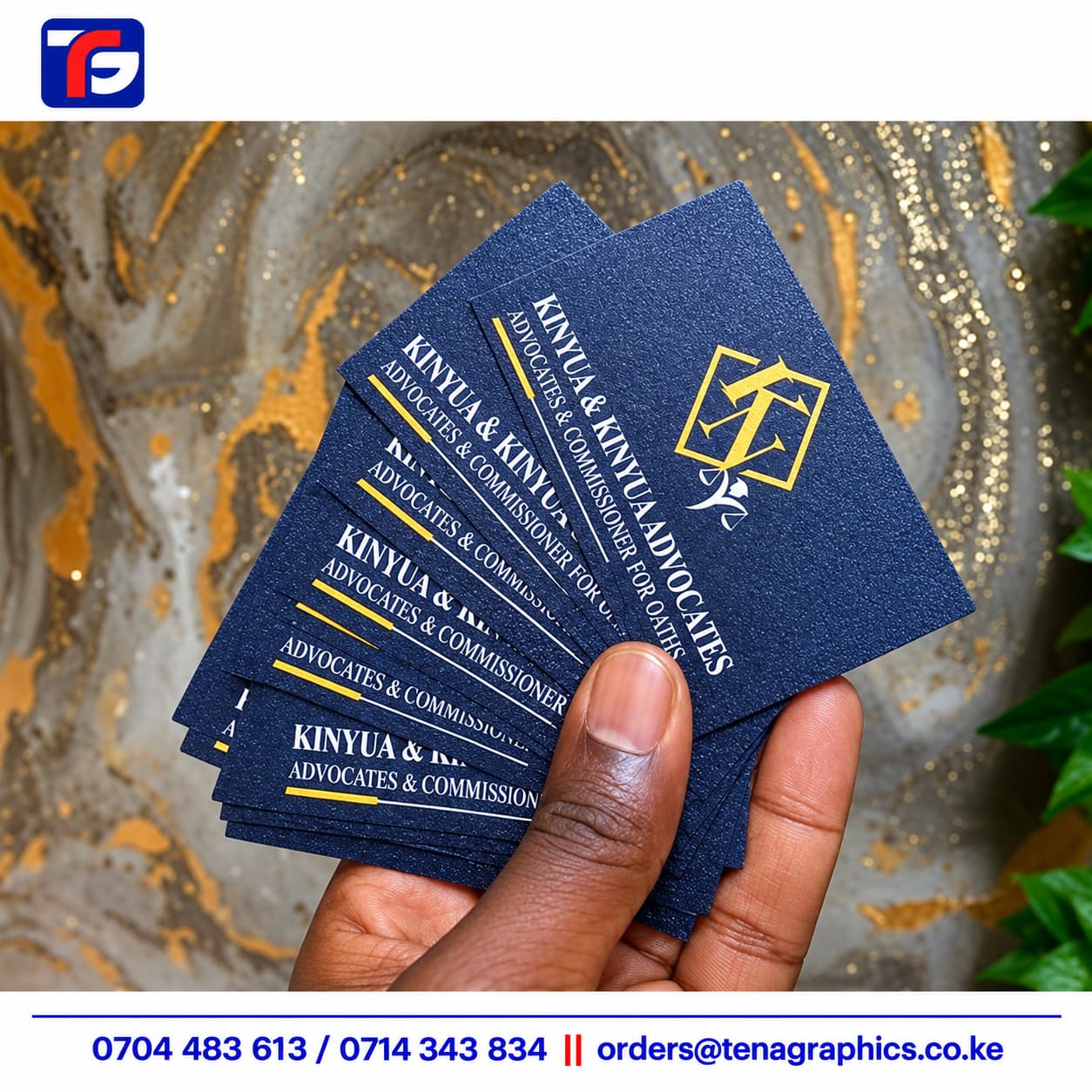
A business card gives someone a simple way to remember your name, understand what you do and contact you after a meeting. Whether you run a small business, work in sales or attend networking events, the card should make those details easy to find.
Before ordering business card printing in Kenya, consider the paper, finish, layout and quantity. These choices affect how the card looks, feels and fits your budget.
This guide explains what to check before approving your design and sending it to print.
1. Decide What Your Business Card Needs to Communicate
Start with the main purpose of the card. Is it introducing you as an individual, promoting your business or helping customers book a service?
For most businesses, the essential information includes:
- Your name.
- Your role, where relevant.
- Your business name and logo.
- A telephone number.
- An email address.
- Your website or physical location, where useful.
Choose contact details that you check regularly. If customers usually enquire through WhatsApp, make it clear which number they should use.
A short description of your service can help when the business name does not explain what you do. For example, “Accounting and Tax Services” communicates more than an unfamiliar company name alone.
Avoid adding every service, social media account and promotional message. Give the most important details enough space to remain readable.
Explore our business card printing options when preparing your order.
2. Choose Paper That Suits Your Business Card
Paper affects the card’s stiffness, texture and appearance.
Paper weight is commonly expressed in grams per square metre, or GSM. A higher GSM generally indicates heavier paper, but stiffness also depends on the paper type and construction. Two cards with the same GSM may feel different.
Ask to see or handle available samples before choosing. Consider:
- Whether the card feels firm enough for regular handling.
- How the surface works with your colours and artwork.
- Whether you need to write on the card.
- How the paper suits your preferred finish.
- The cost at your required quantity.
A textured stock may give a different impression from a smooth coated card. Neither is automatically the best choice; the right option depends on your design and how the card will be used.
Confirm the exact stock in your quotation rather than relying only on terms such as “premium” or “standard.”
3. Compare Matte and Gloss Finishes
A finish changes the surface appearance and feel of a business card. Ask whether the quoted option refers to the paper itself, a coating or an added laminate.
Matte Finish
A matte surface has a subdued appearance with less reflection than gloss. It can suit simple typography, restrained colours and designs where you want a softer visual effect.
However, writing suitability varies. A matte laminate is not necessarily easy to write on with every pen, so test a sample if handwritten notes are important.
Gloss Finish
A gloss surface reflects more light and can give printed colours a more vivid appearance.
It may suit cards with strong colour blocks or photographic elements. Check readability under different lighting, especially if the design contains small text.
Other Finishing Options
Depending on availability, additional options may include rounded corners, foil details, spot UV or other specialist treatments.
Use these selectively. A finish should support the design without making names, contact details or a QR code difficult to read.
| Consideration | What to check |
|---|---|
| Appearance | Does the finish suit your logo and colours? |
| Readability | Are the details clear under normal lighting? |
| Handling | How does the surface show fingerprints or marks? |
| Writing | Can you use your preferred pen on it? |
| Budget | Is the finish included in the quotation? |
4. Choose Between Single-Sided and Double-Sided Printing
A single-sided business card can work well when you have a simple logo and a small amount of contact information.
Double-sided printing gives you more room to separate information. You might place the logo and business name on one side, then your name and contact details on the other.
The extra space is useful when it improves clarity. Avoid filling both sides simply because they are available.
If you want to leave space for appointment dates, reference numbers or handwritten notes, mention this before selecting the paper and finish.
5. Make the Design Easy to Read
A business card has limited space. Clear organisation helps someone understand it quickly.
Give Important Information Priority
Your name, business and main contact method should be easy to identify. Use differences in size and spacing to create a clear reading order.
Use Readable Text
Very small lettering may look acceptable on a large screen but become difficult to read when printed.
Review the design at its intended physical size. Pay particular attention to email addresses, telephone numbers and website text.
Choose Suitable Contrast
Text should stand out clearly from its background. Be careful with pale lettering, detailed photographs behind contact information and colour combinations that reduce readability.
Leave Space Around the Edges
Important content should sit safely inside the cutting area. Background colours and images that reach the edge may need to extend beyond the final trim line.
Ask your printer for the required card dimensions, bleed and safe margins before preparing the artwork.
6. Should You Add a QR Code?
A QR code can direct someone to your website, contact page, portfolio or another useful destination.
Choose a destination that helps the recipient take the next step. For example, a service business might link to a page explaining its main services and enquiry options.
Before printing:
- Test the code on several phones.
- Check it at the intended printed size.
- Keep clear space around it.
- Use strong contrast.
- Confirm that the destination page works well on mobile.
- Check any subscription requirements if using a third-party QR service.
Include a readable contact method alongside the code so people can still reach you without scanning it.
7. How Many Business Cards Should You Order?
Choose your quantity around expected use and how stable your details are.
A large order may offer a lower unit price, but unused cards become waste if your telephone number, address or branding changes.
Consider these situations:
| Situation | Ordering consideration |
|---|---|
| You attend occasional meetings | Start with a quantity suited to your likely use |
| You attend exhibitions or networking events | Estimate how many relevant contacts you expect to meet |
| Several employees need cards | Confirm the quantity and details for each person |
| You are changing your branding soon | Avoid ordering more than you can use before the change |
| Your details are established and usage is regular | Compare quotations for several quantities |
For staff orders, ask whether pricing applies per individual design or across the combined order. Different names and contact details may affect production and pricing.
8. What Affects Business Card Printing Prices in Kenya?
Business card prices depend on the specifications and the work included.
Common factors include:
- Order quantity.
- Paper type and weight.
- Single-sided or double-sided printing.
- Lamination or other finishes.
- Special shapes or cutting.
- Number of individual staff designs.
- Artwork preparation.
- Delivery and applicable taxes.
When comparing quotations, use the same specifications. A price for uncoated, single-sided cards is not directly comparable with one for double-sided cards with specialist finishing.
Confirm whether the quotation includes design, printing, finishing and VAT.
9. When Do You Need a Flyer as Well?
A business card is useful for introductions and contact details. A flyer provides more space to explain an offer, list services or promote an event.
For example, you could hand a business card to a potential partner after a meeting and use a flyer to explain a promotion to customers.
Keep the branding consistent across both items, but adapt the message to the purpose of each.
Explore our business flyers printing services if you need additional space for promotional information.
10. Check the Proof Before Printing
Review every detail before approving production. A proof helps you catch mistakes while they can still be corrected.
Check:
- Names and job titles.
- Telephone and WhatsApp numbers.
- Email addresses and website spelling.
- Logo quality and placement.
- Text readability at the final size.
- QR code destination and scanning.
- Front and back orientation.
- Paper, finish and quantity.
- Bleed and safe margins.
- Whether each employee’s details match the correct design.
Screen colours may differ from printed results. If matching a particular brand colour is important, discuss proofing options with the printer before production.
Frequently Asked Questions About Business Card Printing
What paper is best for business cards?
Choose paper that provides the feel, stiffness and appearance you need. Request samples and confirm the exact stock rather than choosing by GSM alone.
Is matte or gloss better?
It depends on your design and preferences. Matte offers a more subdued appearance, while gloss reflects more light. Compare samples and check readability before deciding.
Can I print different names for my team?
Ask for a quotation covering the number of individual designs and the quantity required for each person. Check every name, role and contact detail before approval.
Can I supply my own artwork?
Confirm the printer’s file requirements first. Ask about accepted formats, dimensions, bleed, safe margins and image quality.
How much does business card printing cost in Kenya?
The price depends on quantity, paper, printing, finishing and design requirements. Request an itemised quotation using your preferred specifications.
Order Business Cards from Tena Graphics
Create business cards that make your name, services and contact details easy to remember.
Visit our Business Cards Printing page to discuss your preferred quantity, paper and finishing options.
Call or WhatsApp 0704 483 613 to request a quotation. Share your artwork, required quantity, preferred specifications and delivery location so we can confirm pricing and production arrangements.
Comments
No comments yet. Be the first to share your thoughts.
Need printing or branding for your business?
Tena Graphics EA Ltd offers high-quality printing, corporate branding, merchandise, business cards, banners, and apparel across Kenya with fast delivery.